Ask a tourist about Rome's neighborhoods and you'll hear the same three names: Trastevere, the Vatican area, the Spanish Steps. Ask a Roman and the answer is different. There's a neighborhood just east of the Forum that locals have quietly loved for decades, the one where old men still argue in the piazza and where the ancient city presses up against daily life like it's nothing. That's Rione Monti. Officially Rome's oldest residential neighborhood. Unofficially, the one I send friends to when they want to feel Rome.
Rome's original neighborhood
Rione Monti is Rione I. Rome's first. The rione system goes back to Augustus, who divided the city into districts in the 1st century BC, and Monti was number one on the list. The name means "hills" (monti) because the district covers parts of the Esquiline, the Viminal, and the Quirinal. Most of its history it was working-class: artisans, craftsmen, families living next to Roman ruins and not thinking twice about them. That's what I love about it. Monti doesn't treat the ancient city like a museum. A 2,000-year-old wall might be serving as the back of a wine bar. That's just how it works here.
Streets that tell stories
Monti's streets are narrower than the rest of the center. Buildings lean toward each other. Laundry hangs off balconies above leather shops and vintage clothing stores. The three main arteries are Via del Boschetto, Via Panisperna, and Via dei Serpenti. Each one is lined with independent boutiques, trattorias with six tables, and bars where the espresso recipe hasn't moved since the 1970s. Hand-painted ceramics, custom jewelry, restored mid-century furniture. The people selling it usually live upstairs.
Piazza della Madonna dei Monti
This is the heart of the neighborhood. Small, unfussy, with a late-Renaissance fountain designed by Giacomo della Porta in 1588 sitting in the middle. On any evening in warm weather, the steps around the fountain are full of Romans drinking wine from the bottle and eating pizza bianca from the bakery around the corner. Not tourists. Romans. This is where our twilight walking tour meets each evening before heading toward the ancient city at golden hour. If you want to feel what Rome feels like before you stare at ruins for three hours, sit here for half an hour first.
Start your evening in Monti
Our twilight walk begins right here in Piazza della Madonna dei Monti before winding through the Colosseum, Trajan's Column, and Capitoline Hill at sunset. Join the twilight walk →
Where the locals eat and drink
For morning coffee, skip whatever is open near Termini and walk into any small bar on Via dei Serpenti. Order at the counter like a Roman: pocket change, drink it standing, done. For lunch, the trattorias on Via Panisperna do classic Roman pasta (cacio e pepe, amatriciana, carbonara) for fair prices. In the evening, the wine bars along Via del Boschetto fill up with young Romans and visitors who did their homework. La Bottega del Caffè on the main piazza wins for people-watching with an Aperol spritz. Ai Tre Scalini is the neighborhood aperitivo institution and has been for years. Get there by 7 if you want a table.
The perfect starting point
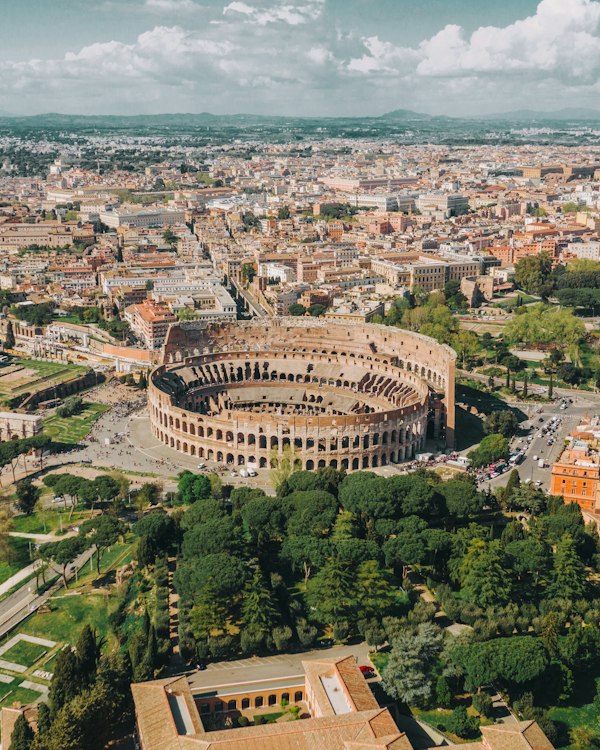
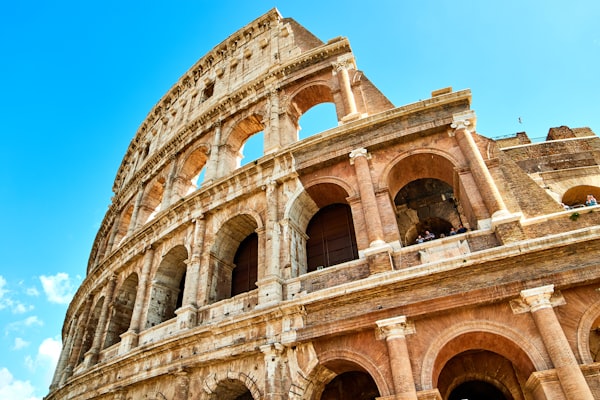
I start my evening tour in Monti for a reason. The Colosseum is five minutes south, the Imperial Forums are just downhill, Trajan's Market looks down on the neighborhood from above. But location is the smaller half. Monti sets the tone. Before I walk you into the ruins, I want you to see the Rome that eats lunch, argues about parking, buys tomatoes at the corner shop. Rome is an old city that still lives, and starting at the Colosseum makes you miss that.
From working class to bohemian
The neighborhood has changed quietly over the last few decades. Trastevere got expensive. The historic center filled up with souvenir shops. So artists, designers, and young entrepreneurs started moving to Monti, and somehow the neighborhood absorbed them without turning into a theme park. The old-timers still sit out on their doorsteps in the afternoon. The butcher on Via dei Serpenti still knows everyone's name. But in between the old shops you'll now find concept stores, natural wine bars, and tiny galleries. On a Saturday morning at the Mercato Monti, I've watched a nonna buying chicory and a stylist hunting vintage fabric share the same produce stand. That's Monti.
If you only have time for one neighborhood beyond the usual sights, make it Rione Monti. Show up in the late afternoon. Leave the map in your pocket. Wander for an hour. Grab a seat on the fountain steps and watch Rome be Rome. Then come find me at twilight, and we'll walk into the ancient city with the last of the good light.