You can't see all of Rome in one trip. Nobody can. After years of walking visitors around the ancient city, I've stopped pretending otherwise and started telling people where to focus instead. These ten sites are the ones that stick with you after you fly home. Some are obvious, a couple might surprise you, and one or two are probably on your route already without you realising what you're looking at.
1. The Colosseum
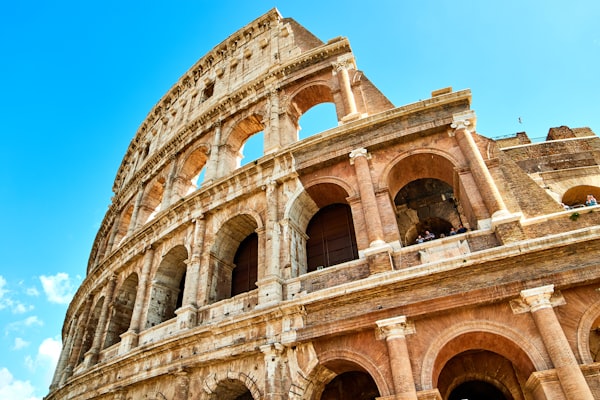
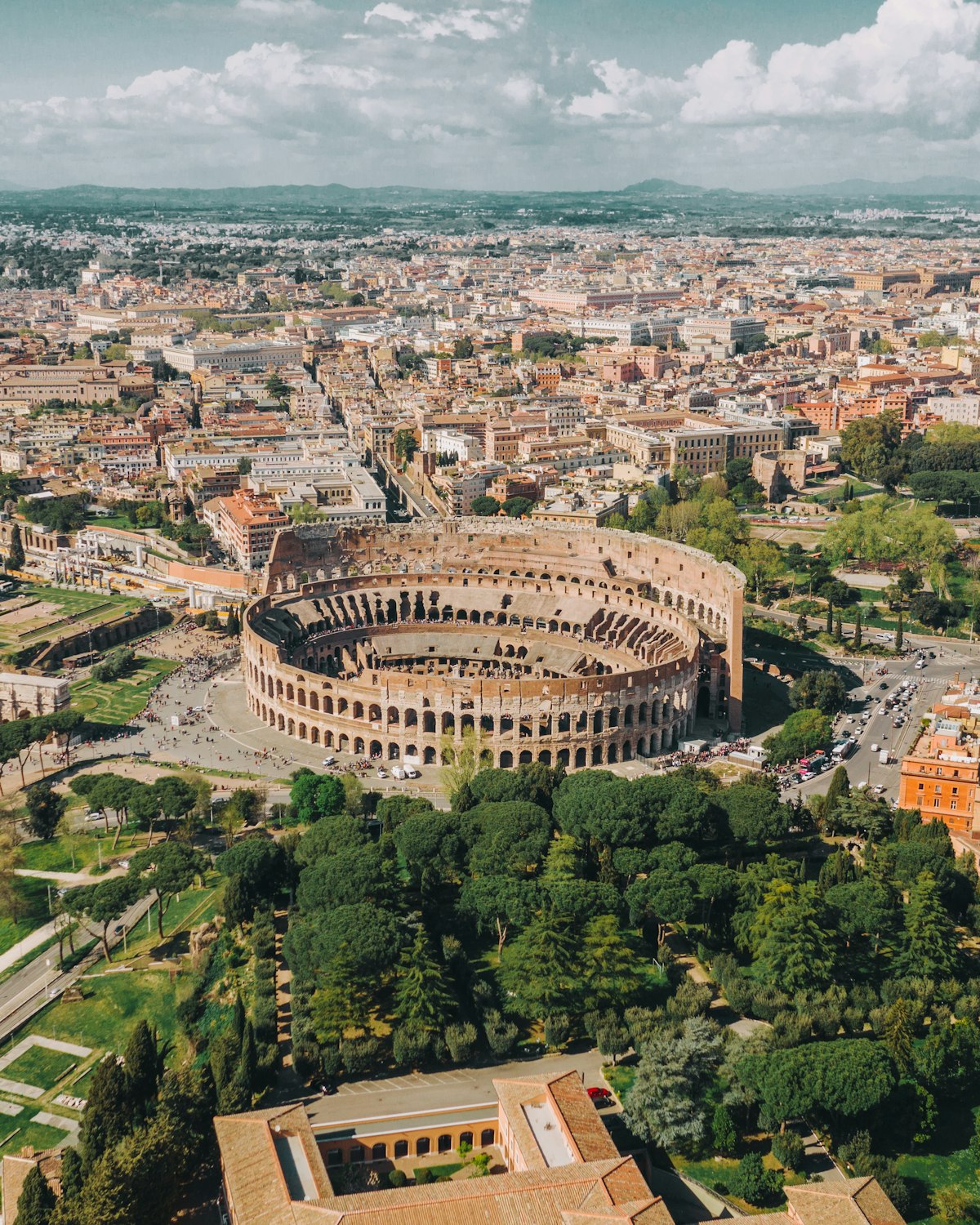
I won't pretend to start anywhere else. The Flavian Amphitheatre went up between 70 and 80 AD and packed in around 80,000 people for gladiator fights, animal hunts, and whatever other spectacle the emperors wanted to throw at them. The travertine is still standing. Go in late afternoon if you can — the stone turns warm and orange and your photos will look ten times better than the ones taken at noon. The underground levels are open now too, and honestly they're the best part. That's where all the mechanics happened.
2. The Pantheon
Nearly 2,000 years old and it still holds the record for the largest unreinforced concrete dome on the planet. Walk in and look straight up. That 9-metre hole in the ceiling is the oculus, and the beam of light it throws down moves across the floor all day like a sundial. The building got lucky: it was converted into a Christian church in 609 AD, which is why it didn't get stripped for parts like half the other ancient buildings in Rome. Entry is still free but you need to reserve a slot now. Go early. The light hits different first thing in the morning, and the crowds haven't shown up yet.
3. The Roman Forum
If you only look at the Forum from the overlook above, you're missing it. Get down there and walk the Via Sacra. This is the road triumphant generals paraded down after winning a war, and you can still see the ruts worn into the paving stones. The Temple of Saturn is the one with the eight columns that everyone photographs. Don't skip the Arch of Septimius Severus or the House of the Vestal Virgins either. Your Colosseum ticket gets you in here too, so there's no excuse.
4. Trajan's Column
It's 30 metres tall and carved top to bottom with 2,600 figures telling the story of Trajan's wars in Dacia. Think of it as a Roman graphic novel wrapped around a marble pillar. It's been there since 113 AD, and you can walk right up to it for free. The carving is wild when you get close: soldiers building bridges, crossing rivers, fighting, dying. Trajan used to be on top. In 1587 the Pope swapped him out for St. Peter, who's still up there now.
5. Piazza Navona
Most people don't realise they're standing on a racetrack. Piazza Navona sits exactly on top of Emperor Domitian's old stadium from the 1st century, and the long oval shape is just the racetrack's footprint, preserved. Bernini's Fountain of the Four Rivers dominates the middle, with the church of Sant'Agnese in Agone watching over it. It's busy now, always has been, and that's part of the charm. If you walk to the northern end and look down where the street dips, you can still see the original stadium arches poking out of the ground.
See 8 of these sites in one walk
Our morning tour covers Piazza del Popolo, Pantheon, Piazza Navona, Castel Sant'Angelo and more.
6. Castel Sant'Angelo
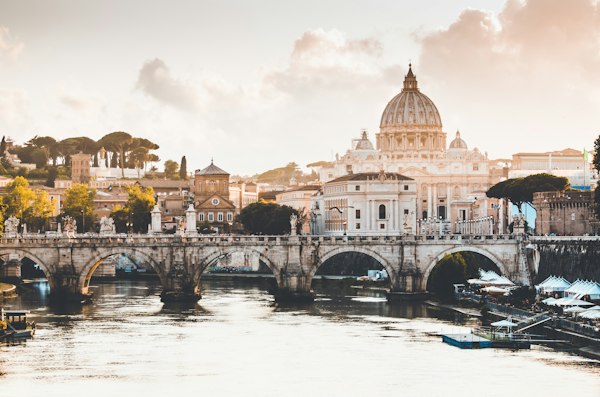
This giant cylinder started out as Hadrian's tomb in 139 AD. Over the next 1,800 years it got recycled into a papal residence, a prison, and a fortress, depending on who was in charge. There's a secret passageway called the Passetto di Borgo that connects it directly to the Vatican. Popes used it to run for their lives during sieges, which happened more often than you'd think. Climb to the terrace at the top and St. Peter's dome sits there framed across the Tiber like it was placed on purpose. Cross over on the Ponte Sant'Angelo with Bernini's angels lining the bridge. That approach is half the experience.
7. Capitoline Hill
Smallest of the seven hills, biggest historically. This was where Roman politics and religion happened. Michelangelo redesigned the piazza up top in the 16th century and it still looks exactly how he drew it: the trapezoid, the star pattern in the paving, the twin museum buildings flanking it. Those Capitoline Museums, by the way, are the oldest public museums in the world. Walk up the Cordonata stairway near sunset and the whole Forum opens up below you. The bronze horseman in the middle of the piazza is Marcus Aurelius — or rather, a copy. The real one is inside the museum, out of the rain.
8. Arch of Constantine
Most visitors walk right past it to get to the Colosseum queue, which is a shame. This is the biggest triumphal arch the Romans ever built, thrown up in 315 AD after Constantine won at Milvian Bridge. Here's the fun part: Constantine cheaped out. A lot of the carvings on it were stripped off older monuments to Trajan, Hadrian, and Marcus Aurelius, then slapped onto his arch. Ancient recycling, basically. The arch sits on the old Via Triumphalis, the parade route generals used to march their victory processions through the city.
Experience ancient Rome at golden hour
Our evening twilight walk takes you through the Colosseum, Trajan's Column, Capitoline Hill, and more at golden hour.
9. Piazza del Popolo
For centuries, if you were coming into Rome from the north, this was the first thing you saw. The oval piazza opens up just inside the old city gate, with an Egyptian obelisk in the middle that's older than the Colosseum by a thousand years — it dates to the 13th century BC. The twin baroque churches at the far end, Santa Maria dei Miracoli and Santa Maria in Montesanto, frame the start of Via del Corso. Walk up the steps to the Pincian Hill terrace for a view straight across the rooftops to St. Peter's. Our morning tour meets here. It's the natural place to start, because Rome started introducing itself here.
10. Porta del Popolo
The gate itself. Porta del Popolo was part of the Aurelian Walls, and the outer facade got a Bernini makeover in 1655 for the arrival of Queen Christina of Sweden. For a thousand-plus years, everyone coming into Rome from the north on the Via Flaminia passed through here first. Stand underneath the arch and you get a hint of what that must have felt like. We start our walking tours at this gate on purpose. If you want to understand how Rome put itself on display for arriving travellers, this is where the show began.
Rome is about 2,700 years old. You're not going to absorb all of it in a weekend, and I don't think you should try. But a single good afternoon walking between these ten sites, with someone who knows what they're looking at, is enough to shift how you think about the city for the rest of your life.