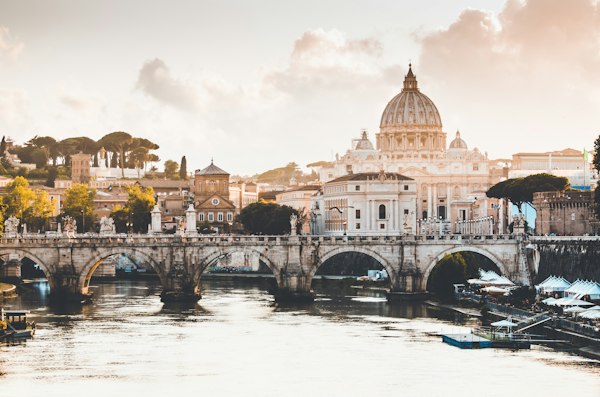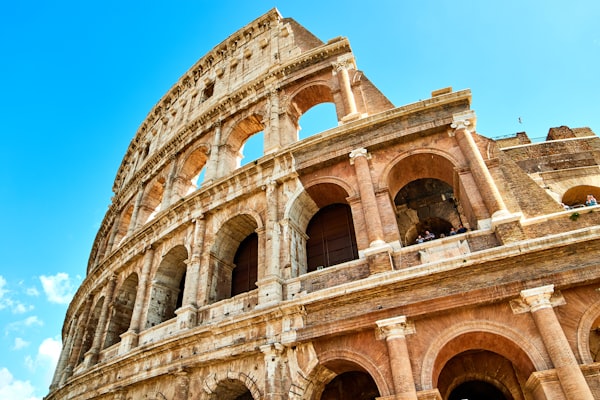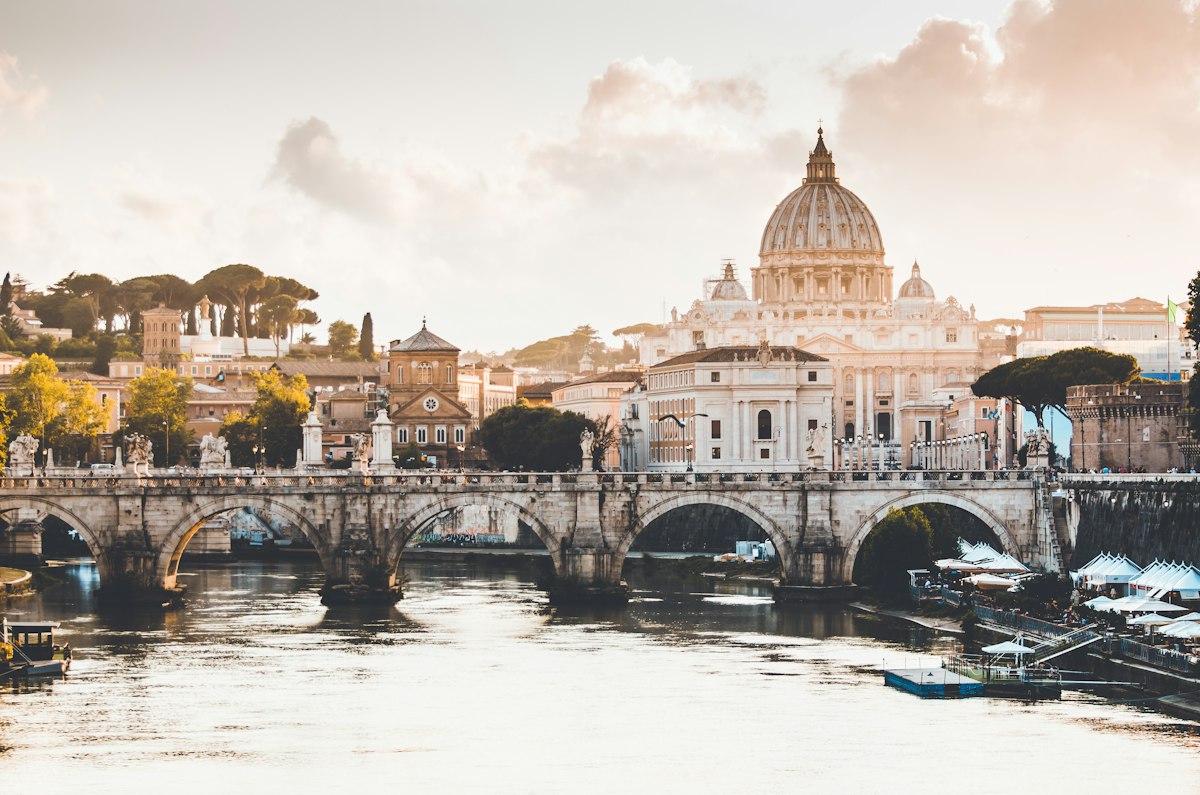
Everyone knows the Colosseum, the Trevi, the Vatican. Fine. Go see them. But the Rome I actually love is somewhere else, on the streets most tourists walk past without looking up. After fifteen years of guiding here, I keep coming back to the same list of Rome hidden gems. Here are twelve of them. Work even three or four into your trip and you'll come home with a completely different idea of what this city is.
1. Rione Monti — Rome's Oldest Living Neighborhood
We start our evening tour here. Monti is the oldest residential rione in Rome, and it still feels residential: tailors, vintage shops, wine bars squeezed into medieval alleys, laundry strung across windows. The Colosseum is a five-minute walk away, but you wouldn't guess it. Head to Piazza della Madonna dei Monti around 7pm. Romans sit on the fountain steps with plastic cups of wine and squares of pizza bianca from the bakery down the street. That's the whole evening. That's the neighborhood.
2. The Aventine Keyhole
There's a green door on the Aventine Hill, on the quiet side of Piazza dei Cavalieri di Malta. Kneel down, put your eye to the keyhole, and St. Peter's dome appears at the end of a hedge-lined garden, perfectly framed. It's one of those moments that sounds hokey until you actually do it. You're looking across three sovereign territories in one glance: the Knights of Malta property, Italy, Vatican City. There's usually a short line but it moves fast. While you're up there, walk two minutes to the Giardino degli Aranci for the panoramic terrace. I think it beats the Pincio, and nobody fights you for a spot on the wall.
3. Basilica of San Clemente — Three Layers of Rome
San Clemente looks like any other church from the street. It isn't. It's three buildings stacked on top of each other. The 12th-century basilica you walk into sits over a 4th-century church, which sits over a 1st-century Roman house with a temple to Mithras in the basement. You can go down through all of it. By the time you reach the bottom level you're hearing running water from an underground stream that once supplied the Roman building, and you've moved backward through two thousand years in about ten minutes. The entry for the lower levels requires a small ticket. Pay it. This is one of the best things to do in the whole city and almost no one does it.
4. Quartiere Coppede — Rome's Secret Art Nouveau Fantasy
I still don't know how to describe this place to people. It's a pocket of maybe fifteen buildings in the residential Trieste-Salario district, designed by Gino Coppede between 1913 and 1926, and it looks like Gaudi and a Disney animator had an argument. Turrets. Gargoyles. Frescoed facades. An arch hanging over the street with a giant wrought-iron chandelier in the middle of it. The Fountain of the Frogs in the center of Piazza Mincio was where the Beatles reportedly took a dip after a show at the nearby Piper Club in 1965. It's a fifteen-minute walk from Villa Borghese. Go.
Discover Rome's hidden side at twilight
Our evening tour begins in Rione Monti — one of Rome's best hidden gems — before winding through the Colosseum, Trajan's Column, and Capitoline Hill at golden hour. Join the twilight walk →
5. The Non-Catholic Cemetery
Also known as the Protestant Cemetery, this is a walled garden in Testaccio where Keats and Shelley are buried. Shelley called it "the most beautiful and solemn cemetery I ever beheld," and then got buried in it himself a year later, which is a fairly Shelley thing to do. Tall cypress trees, weathered headstones, a resident colony of cats who clearly run the place. Entry is free, donations welcome at the gate. I come here when the city gets too loud.
6. Santa Maria della Vittoria — Bernini's Ecstasy
While everyone queues for the Sistine Chapel, one of the greatest sculptures on earth sits in a small church near Piazza della Repubblica, almost always empty. Bernini's Ecstasy of Saint Teresa. The marble looks like it's floating, and the whole chapel is lit by a hidden window Bernini engineered into the ceiling so golden light falls exactly where he wanted it. On either side, sculpted members of the Cornaro family lean out of what look like opera boxes to watch the miracle. It's theatrical in the best baroque sense, and the entry is free. I have brought friends here who've cried. No joke.
7. Testaccio — Rome's Foodie Neighborhood
Testaccio is the working class quarter south of the center and it's where Romans actually go to eat. The covered market (Mercato di Testaccio) is full of lunch counters doing supplì, porchetta sandwiches, pasta gricia in paper bowls. Around the market you'll find old-school trattorias that still serve quinto quarto cuisine, the offal-based cooking that grew out of the neighborhood's slaughterhouse days. There's also Monte Testaccio, a 50-meter hill in the middle of the city made entirely of broken Roman amphorae. Yes, really. An entire artificial hill of ancient trash. The clubs built into its base are some of the best nightlife in Rome.
8. Palazzo Doria Pamphilj
This one hurts a little, because it's right on Via del Corso and almost no one goes in. The Doria Pamphilj family still owns the palace, and they still live in part of it, and the art collection inside is better than plenty of national museums. Velazquez's Pope Innocent X is here. Francis Bacon based his screaming pope paintings on it, and Velazquez himself apparently said "troppo vero" when he saw his own portrait, meaning "too truthful." The mirrored gallery is modeled after Versailles and it absolutely holds up. The audio guide is narrated by Jonathan Doria Pamphilj himself, the current head of the family, and it's more intimate and strange than any audio guide should be.
9. The Appian Way on a Sunday
The Via Appia was the ancient highway that ran from Rome all the way to Brindisi on the Adriatic coast. On Sundays they close it to cars, and you can walk or bike down it past umbrella pines and Roman tombs and the crumbling aqueducts you see on postcards. Rent a bike from one of the shops near Porta San Sebastiano. It's cheap. Pack a sandwich. The road is made of ancient basalt paving stones worn smooth by 2,300 years of traffic, and you're rolling right over them. I did this with my daughter last spring and she still talks about it.
10. Chiesa di Sant'Ignazio — The Fake Dome
Sant'Ignazio is a Jesuit church a short walk from the Pantheon, and it contains one of the best visual tricks in Rome. When they built it in the 1600s, the neighbors refused to let them put up a real dome because it would block sunlight to their apartments. So the architect Andrea Pozzo just painted one. On a flat ceiling. There's a yellow marble disc on the nave floor, and if you stand on it and look up, you'd swear you're staring into a real three-dimensional cupola. Walk ten steps off the disc and the whole thing warps and collapses. Entry is free. The best 17th-century prank in Europe, basically.
11. Giardino degli Aranci (Orange Garden)
Up on the Aventine, this is the second-best thing about that hill (after the keyhole). Bitter orange trees, gravel paths, benches facing a terrace that looks out over Trastevere's tile rooftops, the Tiber bend, and St. Peter's dome across the river. It's where Romans go for sunset. It's also never as mobbed as the Pincio or the terrace at Castel Sant'Angelo, which makes it a better viewpoint by default. Bring a cheap bottle of wine from the minimarket. Nobody minds.
12. San Giovanni in Laterano's Cloister
Quick correction while we're here: Rome's actual cathedral isn't St. Peter's. It's San Giovanni in Laterano. Most visitors don't know this, and even fewer bother with the 13th-century cloister tucked off the side of the basilica (small fee at the door). They should. The twisted marble columns around the cloister garden were made by the Vassalletto family around 1230, and every single pair is different. Some spiral, some are inlaid with colored mosaic, some have ropes of stone wrapped around them like candy. Fragments of medieval sculpture sit along the walls. You'll probably have the whole place to yourself for half an hour. In Rome, that's a gift.
That's my list. None of it will be on the average three-day itinerary, which is the point. Rome rewards you for slowing down and getting a little lost. Try two or three of these, eat lunch somewhere that doesn't have a picture menu, and you'll see a different city than the one the guidebooks describe. If you only do one, do San Clemente. Trust me on that.